Arizona Travel Guide
Grand Canyon, red rocks and desert sunsets.
Why visit Arizona
Arizona is the American Southwest in one state: a mile-deep canyon, red sandstone buttes, forests of giant saguaro cactus, pine-covered mountains and cities with serious food and art scenes. It is also a place where planning matters. Distances are long, summer desert heat is extreme, and several famous sights (Antelope Canyon, Monument Valley) are on Native American land with their own rules. This guide covers the places most visitors want to see, when to go, how to get around and how to stay safe.
The best places to visit in Arizona
Grand Canyon National Park
The Grand Canyon is Arizona's headline attraction and one of the great natural sights of the world. The South Rim is open all year and is the easiest to reach, with overlooks, museums and the Rim Trail. The North Rim is quieter but is only open seasonally because of heavy snow, usually from mid-May to mid-October or later depending on conditions. Plan at least one full day; two lets you add a sunrise or sunset viewpoint and a short hike below the rim. Check the National Park Service website for current road, shuttle and lodging information before you go.
Sedona and the red rocks
Sedona is surrounded by red sandstone formations such as Cathedral Rock, Bell Rock and Devil's Bridge. It is popular for hiking, mountain biking, scenic drives and its art galleries and spas. Trailheads fill early, so start at sunrise in busy seasons. The town is about two hours' drive north of Phoenix and makes a natural stop on the way to the Grand Canyon.
Phoenix and Scottsdale
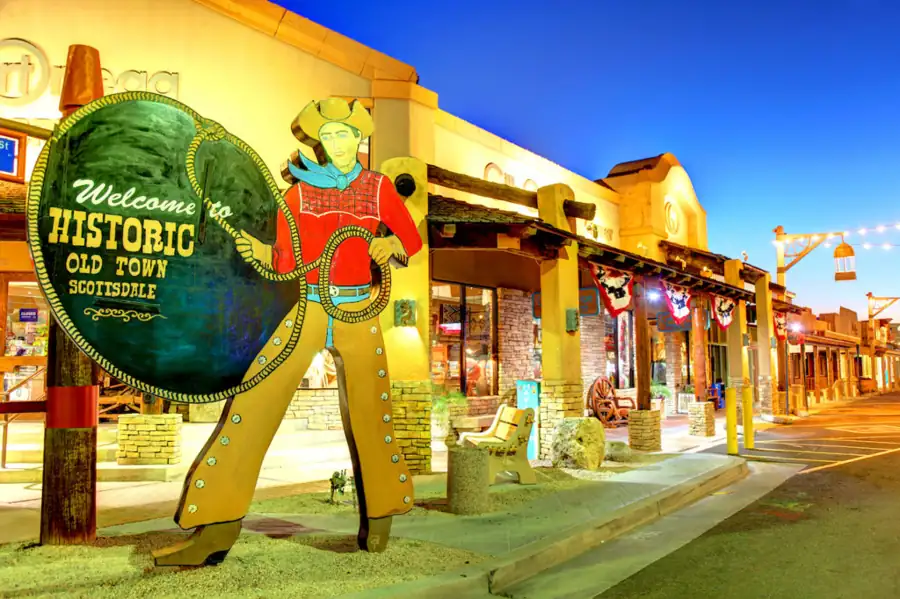
Phoenix, the state capital and largest city, has the Desert Botanical Garden, the Heard Museum (Native American art and culture), the Musical Instrument Museum and hiking at Camelback Mountain and South Mountain. Neighbouring Scottsdale adds the Old Town district, galleries and a large resort scene. Many baseball fans visit in late winter for Major League Baseball spring training.
Tucson and the Sonoran Desert
Tucson is known for Saguaro National Park, the Arizona-Sonora Desert Museum, Spanish colonial history and its food: in 2015 it became the first U.S. city designated a UNESCO City of Gastronomy. Come for the Sonoran hot dog, desert sunsets and nearby historic towns such as Tombstone and Bisbee.
Page, Lake Powell and Horseshoe Bend
Near the Utah border, Page is the base for Horseshoe Bend (a short walk to an overlook above a tight bend in the Colorado River), Lake Powell boat trips and the slot canyons around Antelope Canyon. Antelope Canyon lies on Navajo land and can only be visited with a licensed Navajo-guided tour, so book ahead in spring and summer.
Monument Valley
The towering buttes of Monument Valley sit on the Arizona–Utah border inside the Navajo Nation. The Monument Valley Navajo Tribal Park has a scenic loop drive, and guided tours reach areas that are closed to independent visitors. Allow time for sunrise or sunset when the rocks glow red.
Flagstaff, Petrified Forest and the high country
Flagstaff sits at about 7,000 feet among ponderosa pines, close to the San Francisco Peaks, Lowell Observatory and several national monuments. It was named the world's first International Dark Sky City in 2001, so stargazing is excellent. Further east, Petrified Forest National Park combines colourful badlands with fossilised logs and ancient petroglyphs.
Best time to visit Arizona
- Phoenix, Tucson and the low desert: October through April is the comfortable season, with warm days and cool nights. Summer highs often exceed 100°F (38°C) and can pass 110°F.
- Grand Canyon, Flagstaff and the high country: Spring through fall is best. Summers are mild at elevation, while winter brings snow and some closures.
- Monsoon season: Roughly mid-June to the end of September, afternoon thunderstorms can cause flash floods. Never enter slot canyons or dry washes when storms are forecast, even if the sky above you is clear.
- Spring wildflowers: In wetter years, desert bloom peaks in March and April.
Getting around Arizona
A rental car is the practical way to see most of the state. Phoenix Sky Harbor (PHX) is the main airport; Tucson (TUS) and Flagstaff (FLG) are smaller options. The drive from Phoenix to the Grand Canyon South Rim is roughly 3.5 to 4 hours, Phoenix to Sedona about two hours, and Flagstaff to Page about 2.5 hours. Fuel and services can be far apart in rural areas, so top up the tank and carry extra water.
Time zone tip: Most of Arizona does not observe daylight saving time, so its clocks stay the same all year, while the Navajo Nation (in the northeast) does observe it. Check the time if you cross between the two.
What to eat
- Sonoran hot dogs – a bacon-wrapped hot dog in a soft roll with beans, onions, tomatoes and sauces, a Tucson specialty.
- Navajo tacos and fry bread – available at stands and restaurants near Navajo lands.
- Sonoran-style Mexican food – flour tortillas, carne asada and chimichangas, which Tucson restaurants claim as their own.
- Prickly pear – used in candies, margaritas and syrups throughout the state.
A 7-day Arizona road trip
- Day 1: Arrive in Phoenix. Walk Old Town Scottsdale or visit the Desert Botanical Garden.
- Day 2: Drive to Sedona via the Verde Valley; sunset at a red-rock overlook.
- Day 3: Morning hike in Sedona, then continue to Flagstaff.
- Day 4: Drive to the Grand Canyon South Rim; sunset along the rim.
- Day 5: Sunrise at the canyon, then head east to Page; evening at Horseshoe Bend.
- Day 6: Guided Antelope Canyon tour, then Monument Valley.
- Day 7: Return via Flagstaff to Phoenix (a long driving day) or fly out of Page.
Staying safe in the Arizona desert
- Water: carry far more than you think you need; a common guideline is about a gallon per person per day in hot weather.
- Heat: hike early in the morning in warm months, wear a hat and sunscreen, and turn back if you feel dizzy or sick.
- Flash floods: avoid canyons and washes when rain is forecast anywhere upstream.
- Wildlife: give snakes and scorpions space; watch where you put hands and feet on rocky trails.
- Respect Native lands: follow tour rules, ask permission before photographing people and do not leave marked areas.
Arizona travel FAQs
When is the best time to visit Arizona?
It depends on where you are going. Fall through spring is best for Phoenix, Tucson and the desert; late spring through early fall is best for the Grand Canyon rim and Flagstaff. Avoid midday desert hiking in summer.
How many days do you need in Arizona?
A long weekend is enough for Phoenix and Sedona. To add the Grand Canyon, Page and Monument Valley, plan seven days or more because the driving distances are long.
Do I need a tour for Antelope Canyon?
Yes. Antelope Canyon is on Navajo land and can only be entered with an authorised guided tour. Book in advance for spring and summer.
Is the North Rim of the Grand Canyon open year-round?
No. The North Rim closes in winter because of snow, usually reopening in mid-May. The South Rim stays open all year.
Is Sedona worth visiting?
Most visitors say yes, especially for hiking and scenery. Visit on weekdays or early in the day to avoid crowds at popular trailheads.
Does Arizona have daylight saving time?
No, most of the state stays on Mountain Standard Time all year. The Navajo Nation observes daylight saving time.
Do I need a rental car?
For most itineraries, yes. Public transport between the main sights is limited, and distances are large.
What should I pack for Arizona?
Sun protection, a refillable water bottle, sturdy shoes, and layers; desert nights and high-country mornings can be cold even when days are hot.
Arizona events and seasonal highlights for 2027
Well-known annual events and seasons, with typical timing. Exact dates and ticket details change every year, so confirm on each event's official website before you book.
- Cactus League spring training – Typically late Feb – March · Phoenix area. Major League teams play exhibition games in the Valley.
- WM Phoenix Open – Typically February · Scottsdale. A PGA Tour stop famous for its lively crowds.
- Tucson Gem & Mineral Show – Typically February · Tucson. Part of a huge winter gathering of gem, fossil and mineral dealers.
- Arizona State Fair – Typically October – November · Phoenix. Rides, concerts and food at the state fairgrounds.
Past event guides
Archived from earlier years – use for ideas and confirm current dates on each event's official site.
Prices, hours and event dates change. Confirm details with official sources before you travel. See our editorial policy.